Chase & Ruby’s Classroom Discussion
Teacher’s Corner:
A Note from Lolli
Welcome to Camp Run Amuck!
I'm Lolli, and before campfires, muddy boots, and grandkids filled my days, I spent many happy years as a third-grade teacher. One thing I learned is that some of the very best lessons don't come from a worksheet, they come from a good story and the conversations that follow.
Around camp, we never rush to the next chapter. We stop, wonder, laugh, ask questions, and sometimes change our minds. Every camper has a different idea to share, and that's exactly how great readers grow.
Inside this Teacher's Corner guide you'll find the kinds of questions we'd ask around the campfire, along with writing ideas and cross-curricular connections for Grades 3–6. There aren't any right answers here, just opportunities for thoughtful conversations.
So gather your readers, pull up a chair, and join us around the campfire.
We'll save a seat and some cookies for you.
— Lolli
Camp Run Amuck’s Official Retired 3rd Grade Teacher
Chase & Ruby STEM Club Sabotage
Before You Read
What makes a good teammate?
Is winning still important if the competition isn't fair?
Have you ever discovered something you weren't sure you should tell an adult?
During Reading
The Mystery
Chase and Ruby notice small clues that others overlook. Why are observation skills just as important as intelligence?
What clue first made you think something wasn't right at the STEM Regional?
If you had been part of the STEM Club, what role would you have wanted during the investigation?
Problem Solving
The team uses coding, math, engineering, and science to solve problems. How did each person's different strengths help the group?
Why is teamwork often more powerful than having one "smartest" person?
Honesty
The crew tell a few "little white lies" while gathering information. Were they protecting the investigation, or making a mistake?
Is there ever a situation where breaking a rule feels justified? How would you decide?
Yaya's Wisdom
Yaya seems to know something is happening before anyone tells her. What clues do you think she noticed?
What do you think she means when she says, "Listen with your heart." How is that different from simply listening with your ears?
The Truth
When the STEM crew finally tell the adults everything, why is that such an important moment?
Why was it important that the parents, teachers, and grandparents stood beside the kids instead of taking over?
Looking Deeper
Hayden Harris made poor choices, but we also learn that they didn't have supportive adults in their life. How does knowing someone's story change the way we see their actions?
Can someone make a bad decision and still deserve kindness? Explain your thinking.
After Reading
Which STEM skill and life skill of the kids was most important in solving the mystery?
What surprised you most about the ending?
How did Chase and Ruby grow as leaders during the investigation?
Why do you think the adults listened carefully instead of dismissing the kids' evidence?
What does integrity mean after reading this story?
If you had been on the Regional STEM Board, what decision would you have made?
How did the crew balance curiosity with responsibility?
What lesson from this story could help students in your own classroom?
Writing Extension
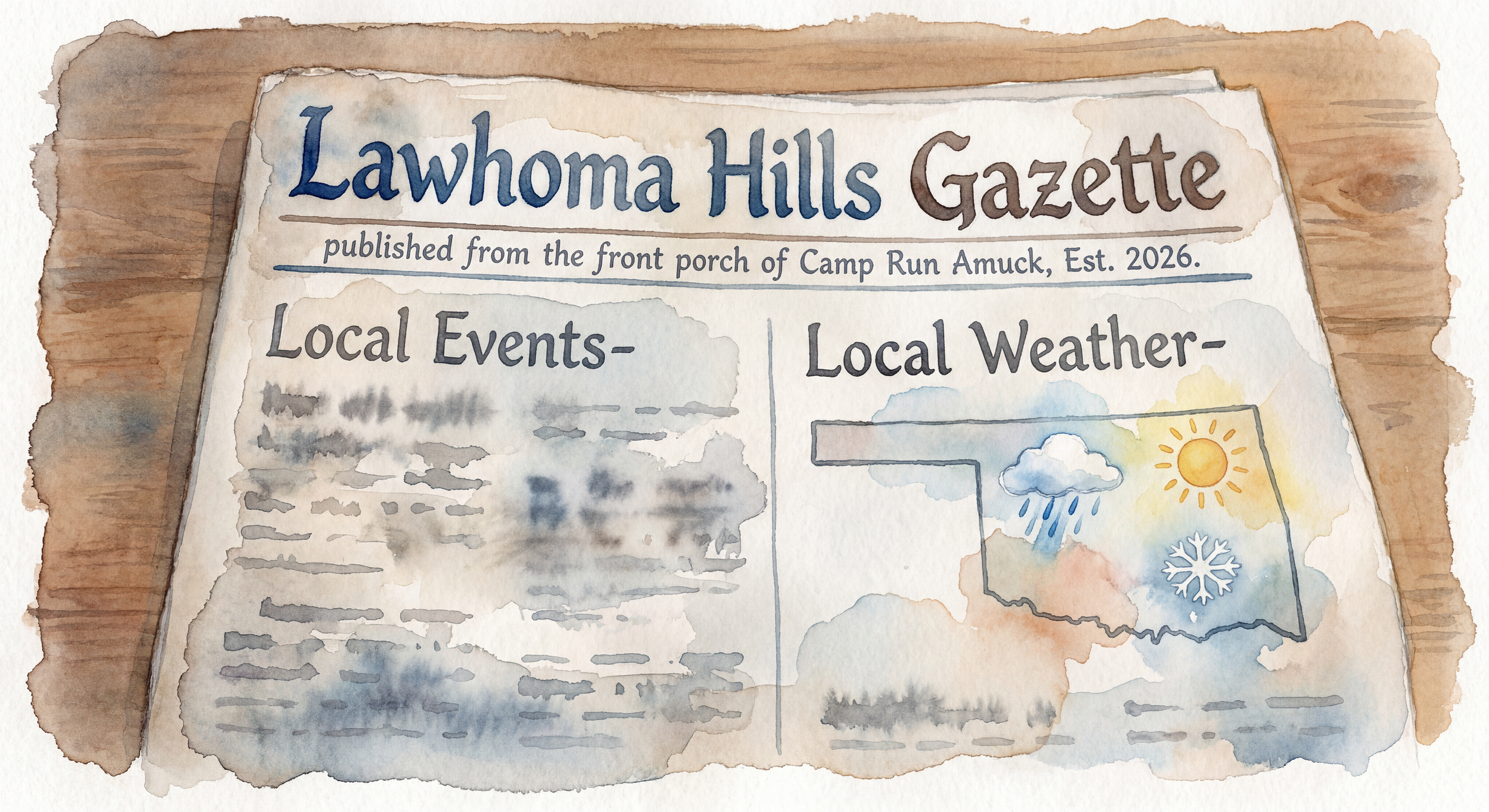
Imagine you're a reporter for The Lawhoma Hills Gazette.
Write a newspaper article covering the STEM Regional investigation. Include the facts, interviews with the STEM crew, and explain why honesty mattered more than winning.
Cross-Curricular Connections
ELA: Mystery structure, inference, evidence, point of view, persuasive speaking.
STEM: Python coding, mathematical reasoning, acoustics, engineering design, scientific investigation, data collection.
Technology: Drones, programming, digital problem-solving, ethical technology use.
SEL: Integrity, teamwork, leadership, empathy, responsible decision-making.
Math: Pattern recognition, logical reasoning, data analysis, problem-solving strategies.
Science: Sound waves, acoustics, observation, experimentation, the scientific method.
Campfire Question
When someone makes a bad choice because they don't have the support they need, should they receive the same consequences as someone who knew better? Why or why not?
Lawhoma Hills, Oklahoma
